Correcting the Grade That Keeps Collecting Water
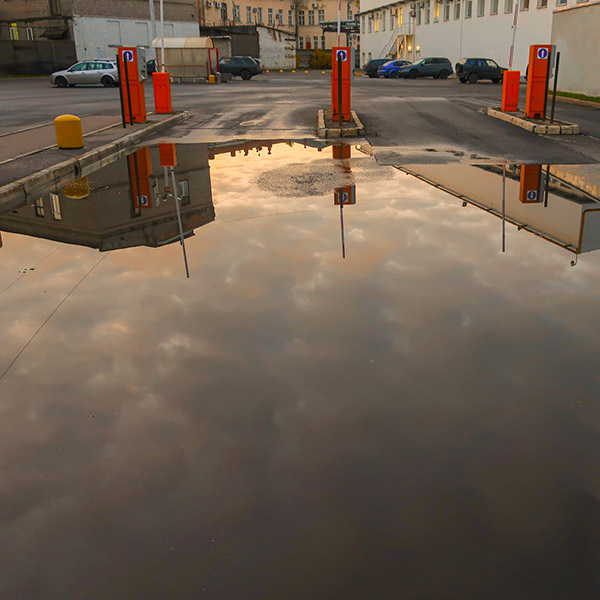
Puddle repair is grade correction. We identify the low spot, determine whether it came from settlement, inadequate original slope, or a drainage structure that is no longer working, and then rebuild the area so water runs off instead of sitting.
It is a specific service and a commonly misunderstood one. Most properties in Reno, NV have tried filling the low area with asphalt at some point, and most of them are still watching the same puddle form after every storm because filling a depression does not change where water wants to go.
Asphalt Protectors brings decades of local pavement experience to this work. We do not walk away from a job that is not right.
Common Standing Water Problems
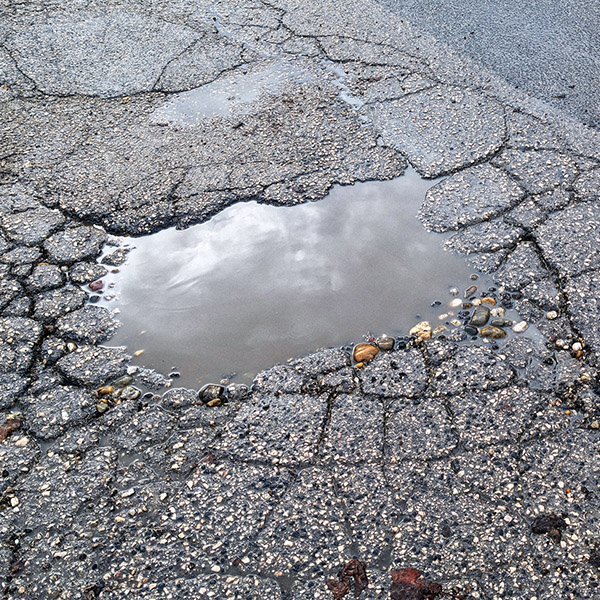
- Birdbaths — Localized depressions holding water long after rain stops, usually from settlement or compaction failure
- Flat Areas With No Fall — Sections built without enough slope to move water toward drainage
- Ponding at Drain Inlets — Water collecting near catch basins because the surrounding grade sits too high or the structure has settled
- Curb Line Pooling — Water trapped against curbs and gutters where the pavement no longer falls correctly
- Settled Utility Cuts — Trench restorations that compacted down over time and became collection points
- Water at Building Edges — Pavement sloping toward the structure instead of away from it, which threatens more than the asphalt
- Ice Formation — Standing water that freezes overnight, turning a drainage nuisance into a serious slip hazard
Our Puddle Repair Solution
- Water Tracking – We observe or map how water actually moves across the surface, which frequently differs from how the site was designed
- Elevation Survey – We shoot grades to find the true low point and establish where the surface needs to be
- Cause Determination – Settlement, original design, and drainage structure failure require different fixes, so we identify which applies
- Removal of the Affected Area – The section is cut and removed so the correction can be built into the base rather than layered on top
- Base Rebuilding to Grade – New base placed and compacted at the elevations that will actually shed water
- Asphalt Placement – Surface installed to the corrected profile with attention to smooth transitions into surrounding pavement
- Verification – Grades checked against our engineering-guided inspection standards, and where practical we confirm performance after rainfall
What Makes Our Drainage Corrections Last
The failure mode on this repair is almost always the same: someone added material to fill the dip without changing the slope leading into or out of it. Water arrives from the same direction, finds the new low point, and pools again a few feet over.
We work from elevations rather than appearance. That means surveying the area, establishing where the surface has to sit to move water to drainage, and rebuilding to those numbers.
Compaction matters heavily here too, since the original puddle was often caused by settlement in the first place. Rebuilding the base to density is what keeps the correction from sinking back to where it started.
Why Choose Asphalt Protectors for Puddle Repair
- We Treat It as Drainage Work – Not as a patch, because a patch is what created most of the puddles we are called to fix
- Long Experience With Local Sites – Serving this region since 1989, we know how these properties were built and where drainage typically goes wrong
- Engineering-Guided Standards – Grade verification follows the inspection process we developed with engineering firms
- Honest Scoping – If the fix requires more than a small area, or a drainage structure needs attention, we tell you before starting rather than during
- Licensed in Nevada and California – Nevada Contractor License 0058389 (A-16, A-8) and California Contractor License 1053257
- We Come Back If It Puddles – The measure of this repair is whether water still stands there, and we hold ourselves to that
Puddle Repair FAQs
Related Services
Drainage problems often connect to these services:
- overlay restoration work – Surface renewal that can incorporate grade corrections across a larger area
- quality repair solutions – Broader repair programs where drainage is one of several issues
- reliable asphalt repair – Structural repair where standing water has already damaged the base
- full-depth reconstruction – The path forward when drainage problems are site-wide rather than localized
Get Standing Water Off Your Pavement
If the same puddles show up after every storm, the grade is telling you something. Contact Asphalt Protectors Inc. in Reno, NV to have it looked at properly, anywhere in our Northern Nevada and Northeastern California service region.
Asphalt Protectors Inc.
14010 Mount Anderson St
Reno, NV 89506
Phone: (775) 827-5666
Receive an Estimate
Monday–Friday: 8am–4pm