The Cheapest Pavement Work You Will Ever Pay For
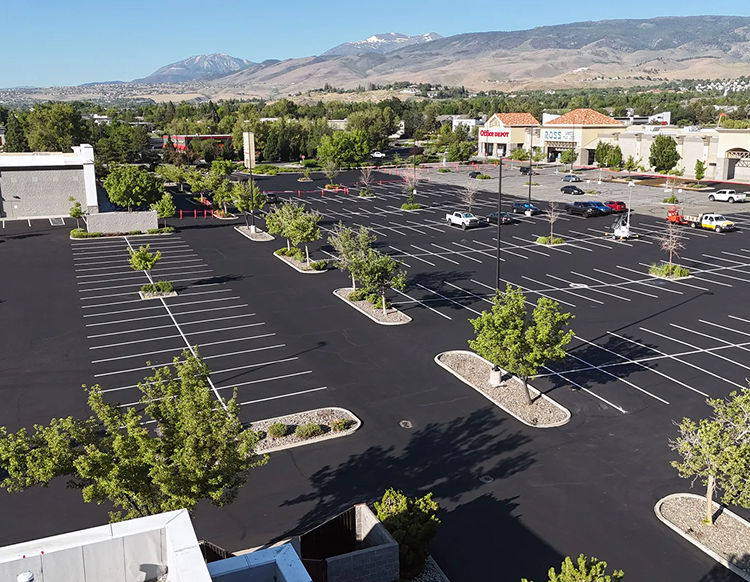
Treating a crack costs a small fraction of repairing the failure that crack eventually causes. That is the entire economic argument, and it holds up on every commercial property we have ever worked on. A few hundred linear feet of crack treatment now prevents base repair measured in thousands later.
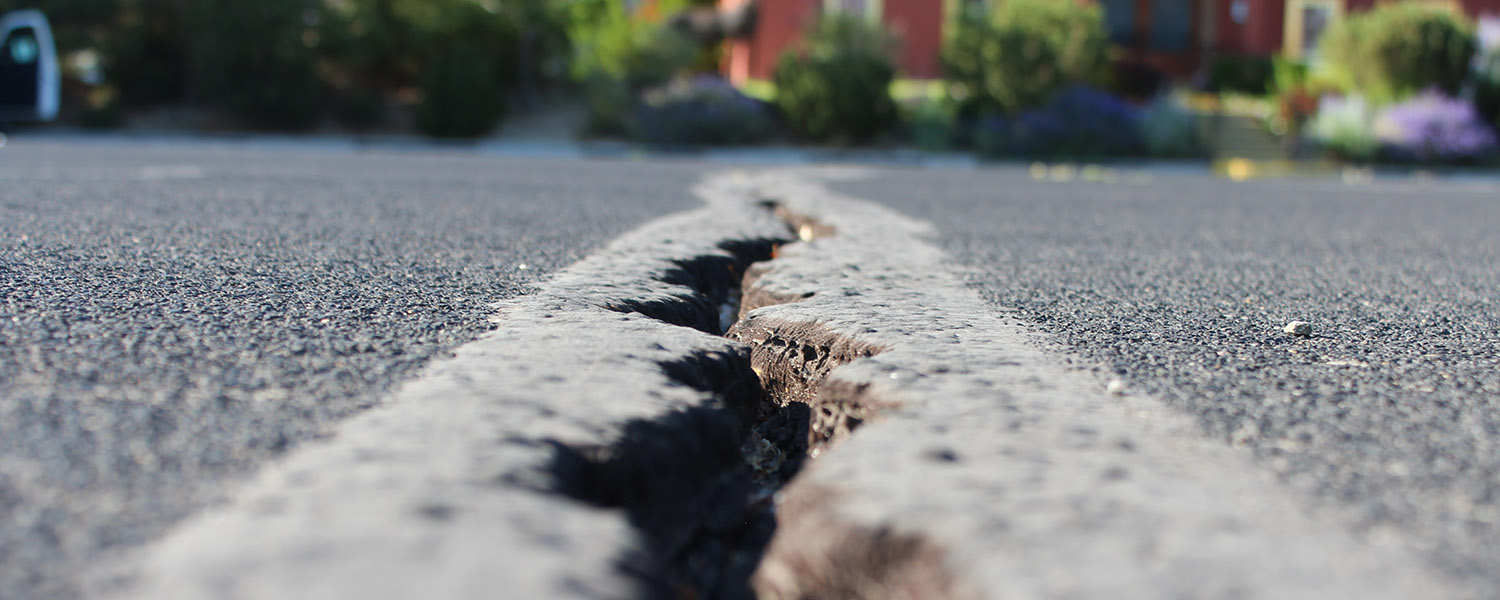
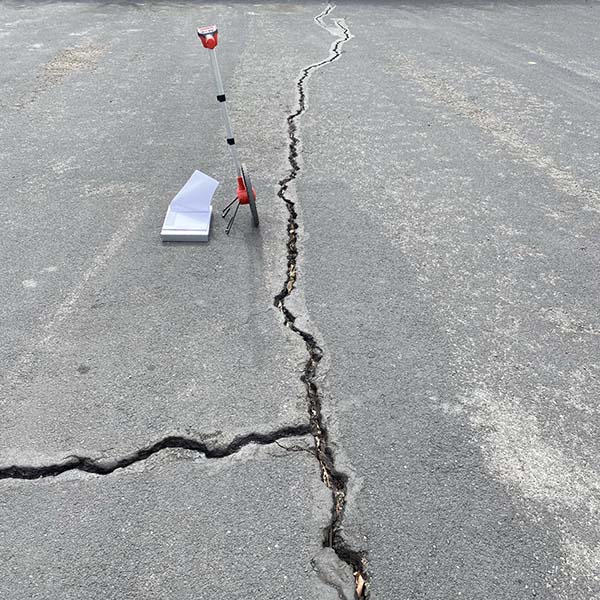
The mechanism is simple. Cracks are how water gets to your base. Once it is down there, the base softens, freeze and thaw cycles break it apart, and you are no longer looking at a crack. You are looking at a pothole, then a failed section, then a reconstruction bill.
Since 1989 we have watched properties across Reno, NV learn this the expensive way. We answer, and we make it right.
Common Cracking Problems
- Transverse Cracks — Straight cracks running across the pavement from thermal contraction, common in this climate’s temperature swings
- Longitudinal Cracks — Cracks following the direction of travel, often at paving joints or along the pavement centerline
- Block Cracking — Large rectangular patterns from binder aging and shrinkage across the surface
- Edge Cracking — Cracks paralleling the pavement perimeter where support or drainage has been lost
- Reflective Cracking — Old cracks working upward through a newer overlay layer
- Joint Cracking — Separation at construction joints and where new pavement meets existing surface
- Alligator Cracking — Scaled interconnected patterns that are past crack treatment and indicate base failure
Crack Filling vs. Crack Sealing: Our Solution for Each
These are two different treatments for two different problems, and using the wrong one wastes the money you spent.
Crack filling places material into cracks that are stable and not moving much with temperature. It works well on block cracking, minor surface cracking, and non-working cracks where the goal is simply to keep water out.
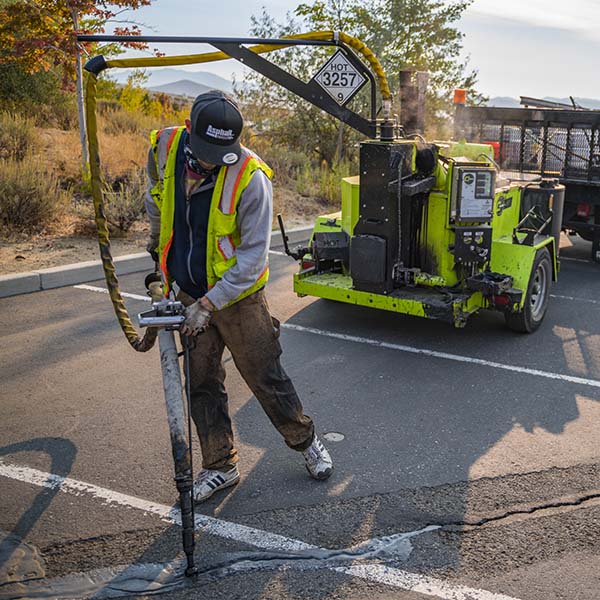
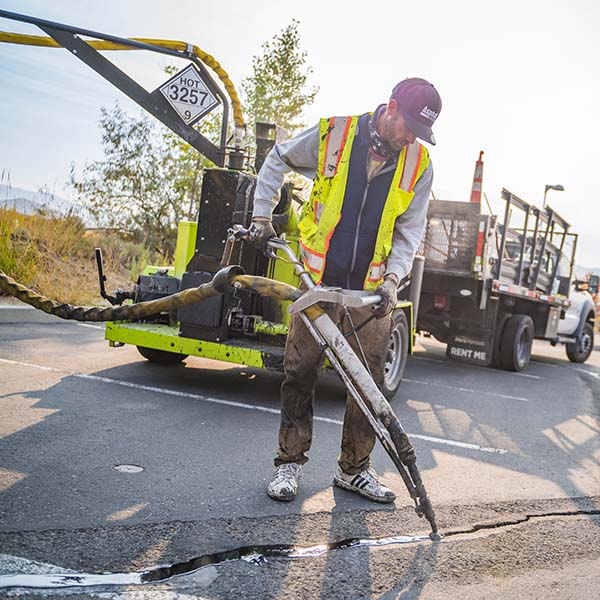
Crack sealing uses hot-pour rubberized material that stays flexible and stretches as the crack opens and closes through the seasons. It is the correct treatment for working cracks, particularly transverse cracks that move significantly with temperature.
Put filler in a working crack and it splits within a season. We assess which cracks you actually have and treat each accordingly.
Our Crack Treatment Process
- Survey and Classification – We map the cracking and identify which cracks are working, which are stable, and which are past treatment entirely
- Routing Where Needed – Cracks are widened into a consistent reservoir so material has proper volume and depth to adhere
- Cleaning and Drying – Debris, vegetation, and moisture are removed, because material will not bond to a dirty or damp crack face
- Material Application – Hot-pour sealant or filler applied at proper temperature and depth for the crack type
- Finishing – Excess struck off flush so the treatment does not create a raised ridge or catch plow blades
- Cure and Traffic Timing – We advise on reopening times so fresh material does not track across your lot
- Verification – Coverage checked against standards outside engineering firms help us keep raising
What Makes Our Crack Treatment Last
Preparation determines everything. Material poured into an uncleaned crack bonds to dirt rather than to pavement, and it lifts out within months. Routing and cleaning are not optional steps we skip when a schedule gets tight.
Material selection is the other half. Hot-pour rubberized sealant costs more than cold filler and it stays flexible through a Northern Nevada winter, which is exactly when cracks are moving most.
And timing matters. Cracks treated while they are narrow and the base is still sound deliver enormous return. Cracks left until the surrounding pavement is spidering are no longer a crack problem, and we will tell you honestly when you have crossed that line.
Why Choose Asphalt Protectors for Crack Treatment
- We Treat the Right Crack the Right Way – Filling and sealing are different services, and matching them correctly is what makes the spending worthwhile
- Working This Climate Since 1989 – Thermal cracking behaves specifically here, and 37 years of local work informs how we treat it
- Materials and Equipment That Match the Job – Proper routing and hot-pour application equipment, not a bucket of cold filler
- Engineering-Reviewed Standards – We consistently work with engineering firms to update and upgrade our quality control
- Licensed in Nevada and California – Nevada Contractor License 0058389 (A-16, A-8) and California Contractor License 1053257
- Straight Answers – If your cracking is past treatment, we say so rather than taking the easy sale
Crack Filling and Sealing FAQs
Related Services
Crack treatment fits into a broader pavement program:
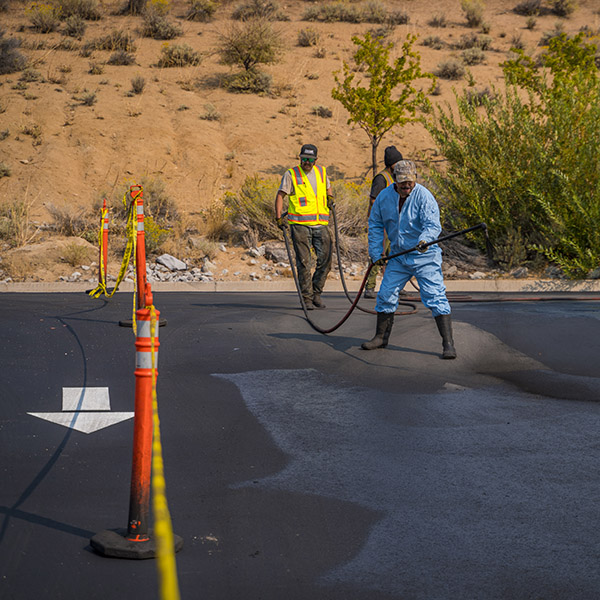
- professional sealcoating services – Applied after crack treatment for complete surface protection
- comprehensive maintenance – Scheduled programs that keep crack treatment on a proper cycle
- asphalt repair services – Structural repair for cracking that has progressed past treatment
- professional pothole repair – Addressing the failures that untreated cracks eventually become
Get Your Cracks Treated Before Winter
Crack treatment is the highest-return pavement work available, and it gets less effective every season you wait. Contact Asphalt Protectors Inc. in Reno, NV for an assessment anywhere across our Northern Nevada and Northeastern California service area.
Asphalt Protectors Inc.
14010 Mount Anderson St
Reno, NV 89506
Phone: (775) 827-5666
Receive an Estimate
Monday–Friday: 8am–4pm