Reducing Trip Hazards and Liability Exposure Across Your Lot
A deteriorating parking lot is a safety problem before it is an appearance problem. Edge drops, crumbling perimeters, sunken utility cuts, and open cracks all create the conditions that produce incident reports, and the property owner is the one who answers for them.
Slip and fall claims frequently originate in parking areas, not inside the building. So do vehicle damage complaints from tenants and customers. Both trace back to pavement that was allowed to deteriorate past a certain point.
Asphalt Protectors has operated under the same family ownership since 2004, and we approach lot repair as risk reduction first. If a repair fails, we come back. No argument.
Common Parking Lot Safety Problems
- Edge Drops and Uneven Surfaces — Height differences in pedestrian paths that create direct trip and fall exposure
- Deteriorated Accessible Routes — Damage along accessible parking and the paths connecting them to building entrances
- Faded and Damaged Markings — Worn striping that leaves traffic direction, stall boundaries, and pedestrian areas unclear
- Crumbling Perimeters — Failed pavement edges that catch pedestrians and damage tires
- Sunken Utility Cuts and Structures — Settled trench restorations and drainage structures sitting below grade
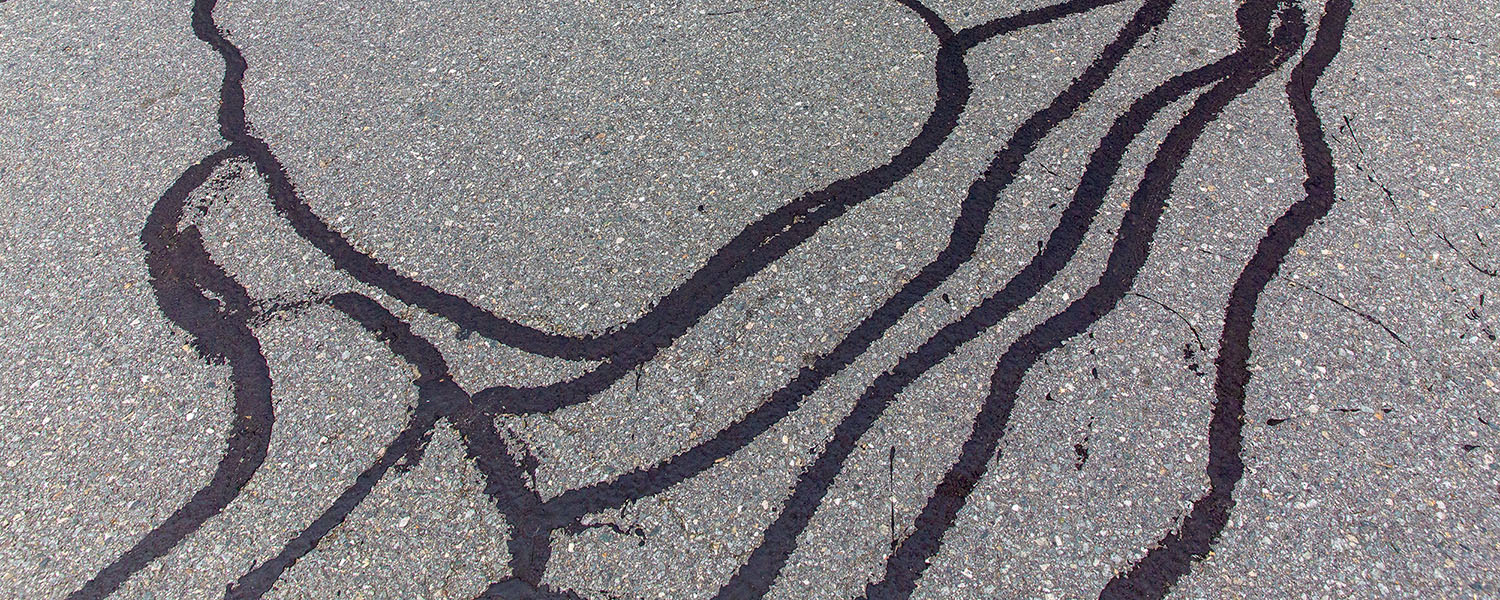
- Open Cracking — Wide cracks that catch heels and cart wheels while admitting water into the base
- Ice-Forming Low Spots — Areas holding water that become slip hazards in freezing conditions
Our Parking Lot Repair Solution
- Full-Lot Safety Walk – We survey the entire property and document hazards rather than looking only at what you pointed us to
- Hazard Prioritization – Conditions get ranked by risk, so the highest-exposure items get addressed first if budget is staged
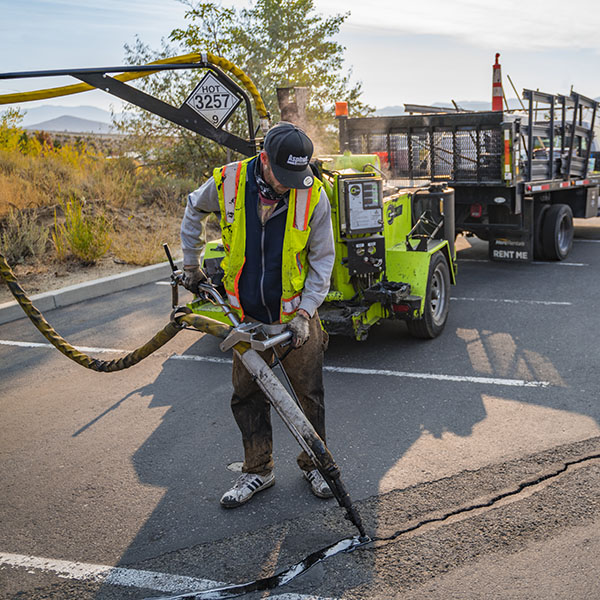
- Repair Method Selection – Each area gets matched to the right treatment, since cracking, settlement, and base failure require different work
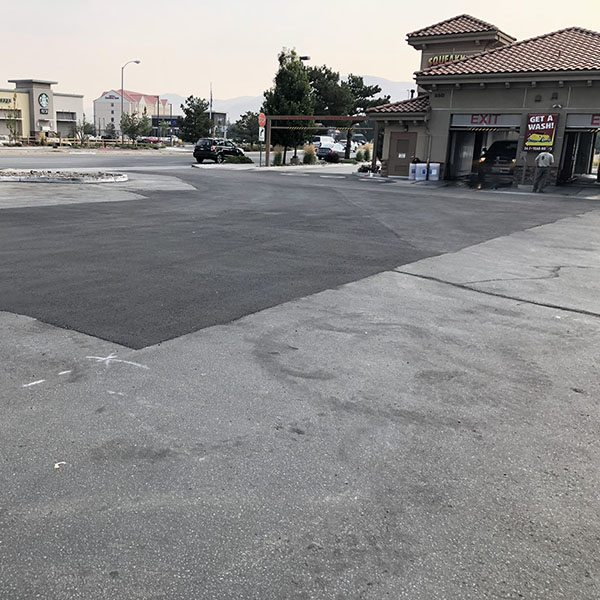
- Cutting and Removal – Failed sections cut back to sound pavement with clean vertical edges
- Base Correction and Placement – Underlying problems addressed, then hot mix installed and compacted to density
- Transitions and Levels – Repairs finished flush with surrounding surfaces so the fix does not create a new hazard
- Documentation – Work verified through a quality control program we continually reinvest in with engineering firms
What Makes Our Lot Repairs Last
A repair program only reduces liability if the repairs stay repaired. A patch that settles or separates within a year has moved the hazard rather than removed it, and it is arguably worse than doing nothing because the condition was documented and then recurred.
That is why we work from cause rather than symptom. Sections get removed to the depth the problem reaches, base gets corrected where it has failed, and everything gets compacted mechanically to real density.
We also look at the lot as one system. Water that is not draining properly in one corner will keep generating new failures across the property, so drainage gets addressed alongside the visible damage.
Why Property Managers Choose Us for Lot Repair
- Risk-Focused Assessment – We document conditions in terms of exposure, which is the language your ownership and insurance conversations actually run on
- Serving This Region Since 1989 – Long-standing local presence, family-run for over two decades
- Trusted by Major Local Properties – National retailers, regional healthcare campuses, and community organizations rely on us for ongoing pavement care
- Every Pavement Trade In-House – Repair, crack treatment, sealcoating, striping, and concrete handled by one contractor
- Licensed in Nevada and California – Nevada Contractor License 0058389 (A-16, A-8) and California Contractor License 1053257
- Reachable and Accountable – You get a person on the phone, and problems with our work get resolved by us
Parking Lot Repair FAQs
Related Services
Lot repair connects directly to these services:
- professional parking lot paving – Full reconstruction when repair is no longer the economical path
- pavement repair services – Structural repair work across commercial surfaces
- pothole repair specialists – Priority attention for the highest-liability hazards on your property
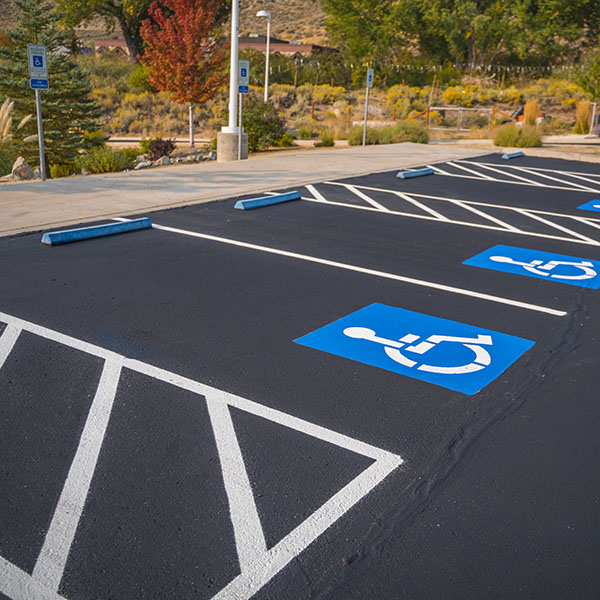
- ADA-compliant striping – Restoring markings, traffic flow, and accessible parking designation after repairs
Schedule a Lot Condition Assessment
We will walk your property, document what we find, and give you a prioritized plan you can budget against. Contact Asphalt Protectors Inc. in Reno, NV to schedule an assessment anywhere across Northern Nevada and Northeastern California.
Asphalt Protectors Inc.
14010 Mount Anderson St
Reno, NV 89506
Phone: (775) 827-5666
Receive an Estimate
Monday–Friday: 8am–4pm